
We independently review everything we recommend. When you buy through our links, we may earn a commission at no extra cost to you. Learn more >
The Best Universal OBD2 Scanner
ANCEL Classic Enhanced Universal OBD2 Scanner
The 60-Second Review
What if that terrifying check engine light was actually just a loose gas cap trying to trick you into a $150 mechanic fee? We scrutinized the technical specs and real-world buyer feedback to see if it actually solves this problem.
- Battery-Free Interface: Draws power directly from your vehicle’s data link connector so you can instantly identify and clear fault codes without downloading smartphone apps, paying for software subscriptions, or replacing batteries
- Universal OBDII Protocols: Communicates seamlessly with 1996 and newer vehicles to quickly isolate the exact emission sensor triggering your dashboard alerts
- Live Data Streaming: Displays real-time engine statistics and freeze-frame diagnostics directly on the screen so you can verify a repair worked before taking your car in for an emissions test
The Catch: Advanced DIY mechanics note that this passive device only reads emission-related OBDII codes and cannot access ABS or transmission systems. This stripped-down programming keeps the interface exceptionally fast and straightforward for everyday commuters who simply need to identify and clear a basic check engine light.
Deep-Dive Breakdown and Product Specification
Ditch the Frustrating Smartphone App Subscriptions
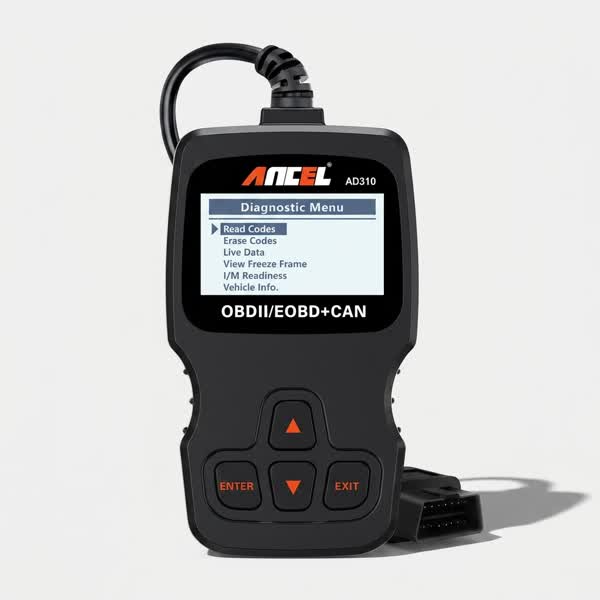
Ever noticed how every new gadget demands a piece of your smartphone, complete with mandatory updates and hidden subscription fees? When you are leaning over a hot fender with grease on your knuckles, the last thing you want to do is fumble with Bluetooth pairing or remember a forgotten app password. This scanner takes a refreshingly old-school approach. It features a rugged, dedicated LCD screen with a crisp white backlight and adjustable contrast, meaning you can easily read the diagnostic data whether you are working in a dimly lit garage or under the blinding midday sun. You just plug the sturdy two-and-a-half-foot cable into your dash, and the interface fires up instantly without draining your phone battery or asking for your email address. It relies on a straightforward four-button layout so you can navigate the menus even while wearing thick work gloves. While it lacks the flashy color graphics of an expensive tablet system, this straightforward design ensures you get the exact engine fault data you need immediately, letting you get your hands back on your wrenches instead of a touchscreen.
Reliable Diagnostics Powered Directly by Your Vehicle
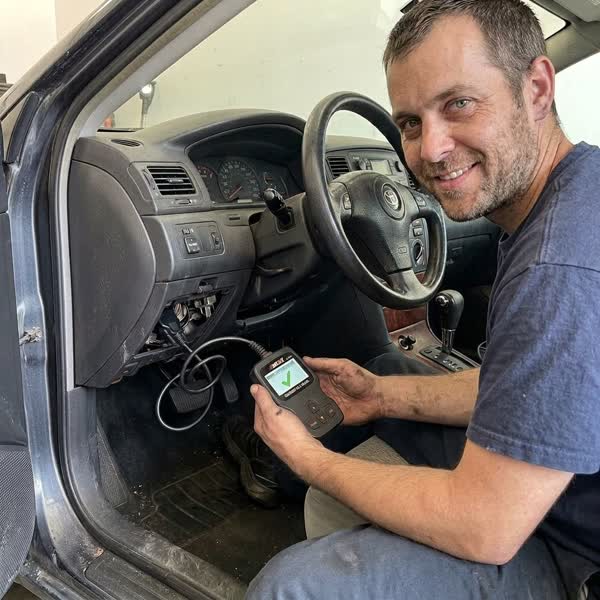
There is a distinct kind of frustration that hits when you pull a tool out of your chest to diagnose an urgent problem, only to discover its internal batteries died six months ago. You will never experience that letdown with this code reader. It completely eliminates the need for AA batteries or internal charging packs by drawing a tiny amount of power directly from your vehicle’s 16-pin OBDII Data Link Connector. The moment you push the connector into the port under your steering column, the unit surges to life, ready to communicate with your engine’s computer. This means the tool can sit quietly in your glovebox or the trunk of your car through blistering summers and freezing winters without degrading an internal lithium cell. It is always ready to work exactly when a dashboard warning light interrupts your commute. Keep in mind that this requires your car battery to have at least some charge to power the diagnostic port. As long as your vehicle has basic electrical juice, this scanner provides a permanent, reliable lifeline to your engine’s brain without you ever having to hunt for a charging cable.
Catch Hidden Emissions Failures Before They Happen
Waiting in line at the state inspection station often feels like rolling the dice, especially if you recently cleared a dashboard warning or disconnected your battery. The engine computer runs a series of self-checks called Readiness Monitors, and if they have not finished their drive cycles, you will fail the inspection even if the dreaded light is off. This tool completely removes that guesswork by giving you direct access to the I/M Readiness status. With a few button clicks, you can see exactly what the emissions inspector will see. It monitors the misfire system, fuel system, and catalytic converter components in real time. If a sensor is still returning a pending status, you know you need to put a few more highway miles on the engine before paying the testing fee. While this data stream is incredibly accurate for emissions-related systems, it is strictly focused on the engine and will not pull data for chassis or body modules. However, for the everyday driver looking to confidently pass an emissions test and avoid a wasted afternoon at the inspection bay, having this information at your fingertips is invaluable.
Broad Vehicle Compatibility With a Focused Purpose
Have you ever bought a tool only to find out the word universal actually meant everything except the specific thing you own? Navigating automotive communication protocols can feel like trying to translate a dead language. Fortunately, this scanner cuts through the confusion by supporting all major OBDII protocols, including CAN, J1850 PWM, J1850 VPW, ISO9141, and KWP2000. In practical terms, this means if your car, light truck, or SUV was sold in the United States after 1996, this unit is engineered to communicate with it seamlessly. It does not matter if you drive a domestic pickup for hauling lumber or an imported sedan for the daily grind. It reads hard, pending, and historic engine codes with equal precision. The trade-off for this broad, lightning-fast engine compatibility is that it intentionally ignores specialized systems like anti-lock brakes, airbags, or transmission modules, which often require brand-specific dealer software. By keeping its programming strictly focused on engine diagnostics, it avoids the software bloat and sluggish processing that plagues more complicated devices, giving you a tough, dependable tool that speaks your engine’s language clearly.
PRODUCT SPECIFICATIONS
| Display Screen | 2.25-inch backlit LCD screen |
| Power Source | Directly from vehicle's OBDII port |
| Cable Length | 2.5-foot thick insulated flexible cable |
| Vehicle Compatibility | 1996 and newer OBDII vehicles |
| Supported Protocols | All major standard OBDII protocols |
| Item Weight | Lightweight 12-ounce compact handheld design |